

Over the past two decades, the Grammy Awards have become more than a celebration of music—they have evolved into one of the most daring and influential fashion stages in the world. Unlike other award shows, the Grammys encourage risk-taking, creativity, and self-expression, allowing artists to turn the red carpet into a canvas for personal and cultural statements.
From coordinated group looks to avant-garde fashion experiments, Grammy style from the last 20 years reflects how music, identity, and fashion have grown increasingly intertwined.
The Mid-2000s: Glamour Meets Pop Stardom
The mid-2000s marked a shift toward bold glamour and celebrity branding. In 2005, Jennifer Lopez embraced sleek sophistication, favoring curve-hugging gowns that reinforced her status as a red carpet icon. Beyoncé, both as a solo artist and a former member of Destiny’s Child, dominated this era with metallic fabrics, dramatic silhouettes, and confident styling that matched her growing superstardom.
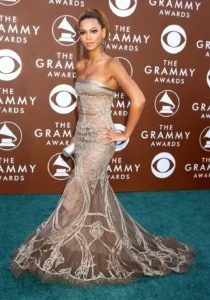
Rihanna also began her Grammy fashion journey during this time, initially opting for elegant gowns that hinted at the fearless style evolution she would later embrace.
The Late 2000s: Fashion Takes Center Stage
By the late 2000s, Grammy fashion began drawing as much attention as the awards themselves. Kanye West brought high-fashion sensibilities to menswear, favoring tailored suits and luxury designers that blurred the line between hip-hop and runway fashion.
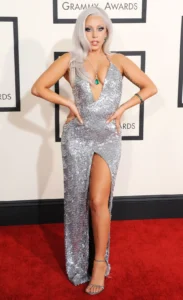
Lady Gaga emerged as a true fashion disruptor. Her 2010 and 2011 Grammy appearances redefined red carpet expectations, most notably when she arrived inside an egg-like vessel designed by Hussein Chalayan. The performance-art-inspired moment cemented her reputation as one of the most daring fashion figures in Grammy history.
The Early 2010s: Risk-Taking and Reinvention
The early 2010s were defined by experimentation and reinvention. Rihanna shocked audiences with bold cuts, sheer fabrics, and unconventional silhouettes, transforming herself into a high-fashion risk-taker. Each Grammy appearance felt unpredictable, keeping fans and fashion critics on edge.

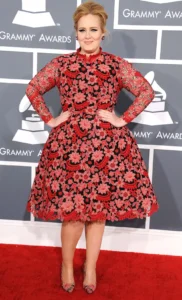
Adele, on the other hand, brought timeless elegance to the red carpet. Her preference for classic black gowns and refined tailoring proved that simplicity could still make a powerful statement in an era dominated by bold experimentation.
The Mid-2010s: Menswear Evolves
As fashion norms shifted, male artists began pushing boundaries on the Grammy red carpet. Pharrell Williams became a standout style figure, mixing streetwear with luxury fashion. His now-iconic oversized hat in 2014 sparked global conversation and symbolized the Grammys’ openness to individuality.
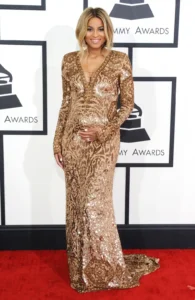
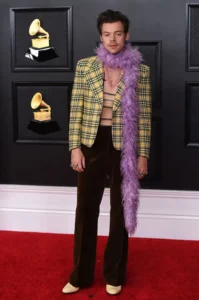
Harry Styles also began redefining modern menswear during this period. His embrace of color, prints, and gender-fluid silhouettes challenged traditional red carpet standards and helped reshape fashion expectations for male artists.
The Late 2010s: Drama and High Fashion
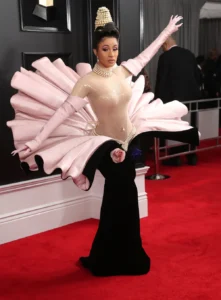
By the late 2010s, Grammy fashion leaned heavily into drama and couture. In 2019, Cardi B stunned in a sculptural vintage Thierry Mugler gown, complete with pearl accents and exaggerated structure. The look was widely praised as one of the most striking Grammy outfits of the decade.
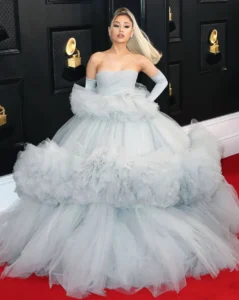
Ariana Grande delivered one of the era’s most talked-about looks in 2020, wearing a voluminous gray puffy gown that blended fairy-tale romance with high fashion, proving that dramatic silhouettes still held red carpet power
 .
.
The Early 2020s: Individuality and Symbolism
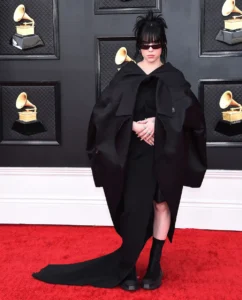
Recent Grammy fashion has focused on storytelling and personal symbolism. Billie Eilish became known for her oversized silhouettes and monochrome palettes, using fashion to challenge beauty standards and industry expectations.
At the 63rd Annual Grammy Awards, Harry Styles dominated headlines with a Gucci ensemble featuring a yellow tweed blazer layered over a striped sweater vest. The look was celebrated for its vintage inspiration and playful confidence, further cementing his influence on modern fashion.
2025: A New Era of Statement Details
In 2025, Taylor Swift made waves with a Life of a Showgirl-inspired mini dress by Vivienne Westwood. The ensemble gained widespread attention due to a dangling “T” charm cascading down her thigh, adding a layer of symbolism that sparked online discussion and fashion analysis.

This era highlights a shift toward meaningful details, where accessories, tailoring, and subtle elements carry as much impact as bold silhouettes.
Two Decades of Grammy Style Evolution
Over the last 20 years, Grammy fashion has transformed into a powerful form of artistic expression. From Lady Gage’s performance-art statements to Rihanna’s fearless experimentation, and from Harry Styles’ menswear revolution to Taylor Swift’s symbolic elegance, the red carpet has mirrored the evolution of music itself.
As the Grammys continue to celebrate creativity, one thing remains certain: fashion will always be an essential part of the show’s legacy, telling stories, breaking rules, and making history one unforgettable look at a time.